WhatsApp
+62818-0847-5888
Work Hours
Monday to Friday: 9AM - 5PM
WhatsApp
+62818-0847-5888
Work Hours
Monday to Friday: 9AM - 5PM

 Byadmin
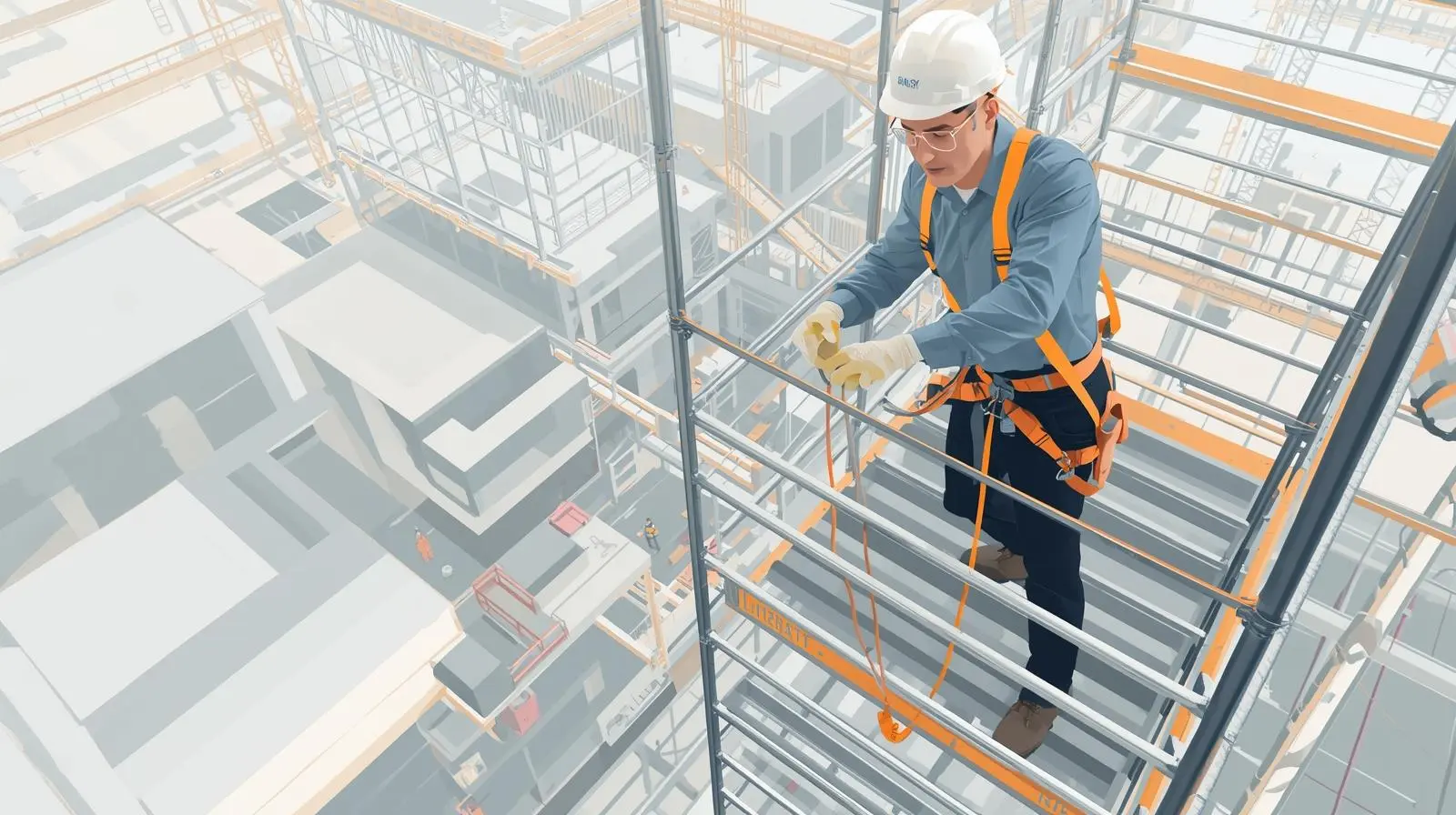
Work at height remains one of the most hazardous activities across construction, infrastructure, and industrial maintenance projects. Despite technological advances and improved safety protocols, falls from elevation consistently rank among the leading causes of workplace fatalities and serious injuries worldwide. Understanding these risks isn’t just about compliance—it’s about protecting lives through engineered solutions and informed decision-making.
Work at height refers to any task performed where a person could fall a distance that might cause personal injury. This includes working on ladders, scaffolding, elevated platforms, roofs, or any surface where falling could result in harm. The critical factor isn’t the absolute height, but rather the potential for injury from a fall.
Projects involving work at height span multiple industries: building construction, telecommunications tower maintenance, bridge inspection, warehouse operations, wind turbine servicing, and shipbuilding. Each environment presents unique challenges that demand tailored safety approaches.
The continued prevalence of height-related accidents stems from multiple factors. Human error, inadequate equipment, poor planning, and environmental conditions all contribute to elevated risk levels. Many incidents occur not from extreme heights, but from relatively low elevations where workers underestimate danger or rush through tasks without proper precautions.
Understanding the specific risks allows project managers, safety officers, and workers to implement preventive measures that address root causes rather than symptoms.
Unprotected edges at construction sites, building roofs, or elevated platforms represent the single largest risk category. Workers operating near edges without guardrails, safety nets, or personal fall protection systems face immediate danger. Even momentary distraction or a simple misstep can result in catastrophic consequences.
This risk intensifies during structural steel work, roofing projects, and façade installation where workers must operate at peripheries. The absence of passive protection systems forces complete reliance on active fall protection—a scenario that increases vulnerability to human error.
Scaffolding failures contribute significantly to height-related incidents. Common issues include:
Scaffolding represents a temporary structure that must support dynamic loads while maintaining stability. Any compromise in structural integrity or assembly protocol creates immediate risk for everyone on site.
Portable ladders remain ubiquitous across projects despite being involved in numerous incidents annually. Risks include incorrect ladder selection for the task, improper positioning angles, unstable base support, overreaching while on ladders, and ascending or descending while carrying materials.
Many ladder-related falls occur at relatively low heights but still result in serious injuries. The temporary and portable nature of ladders means workers frequently set them up without adequate attention to stability and positioning.
Roofs with fragile materials—including certain metal panels, skylights, aging corrugated sheets, or deteriorated roof sections—pose penetration risks. Workers may step onto surfaces that cannot support their weight, resulting in falls through the roof structure.
This risk is particularly insidious because fragile surfaces aren’t always visually apparent. Weather deterioration, hidden damage, or unmarked weak points create unexpected hazards.
Material hoists, personnel lifts, and aerial work platforms introduce mechanical failure risks. Equipment malfunctions, improper operation, inadequate maintenance, or exceeding rated capacities can lead to catastrophic failures.
The integration of synthetic lifting equipment into height work operations demands particular attention to load specifications and material condition. Engineered synthetic solutions offer advantages in weight reduction and corrosion resistance, but only when properly specified and maintained according to manufacturer guidelines.
Fall protection equipment failure represents a critical risk category. This includes:
The effectiveness of fall protection depends entirely on system integrity. A chain is only as strong as its weakest link—a principle that applies literally to fall arrest systems where any component failure compromises the entire safety mechanism.
Wind, rain, ice, and temperature extremes significantly amplify work at height risks. Wet surfaces reduce friction and increase slip potential. High winds affect stability on elevated platforms and make material handling dangerous. Extreme temperatures impact both human performance and equipment characteristics.
Projects often face pressure to maintain schedules despite adverse conditions, creating dangerous scenarios where environmental risks are underestimated or ignored.
Multi-level construction sites with simultaneous operations create risks when communication breaks down. Falling objects from upper levels, uncoordinated crane operations, or unexpected movement of materials can endanger workers below or at different elevations.
Effective height work requires clear protocols for tool and material handling, designated drop zones, and reliable communication systems between elevation levels.
Addressing work at height risks demands an engineering mindset rooted in systematic analysis and material science understanding. The hierarchy of controls provides the framework: elimination, substitution, engineering controls, administrative controls, and finally personal protective equipment.
Modern synthetic materials have revolutionized lifting and fall protection systems. Advanced fiber technologies offer strength-to-weight ratios that exceed traditional materials while providing resistance to environmental degradation. However, these advantages only materialize through proper engineering specification and quality manufacturing standards.
The concept of #SyntheticStrength extends beyond marketing to represent a fundamental shift in how safety equipment performs under real-world conditions. Engineered solutions account for dynamic loading, environmental exposure, and long-term reliability—factors that distinguish professional-grade equipment from generic alternatives.
Sustainable risk reduction requires more than equipment and procedures. It demands organizational commitment to continuous training, regular equipment inspection, thorough pre-task planning, and empowerment of workers to stop unsafe operations without fear of reprisal.
Project teams that approach height work with the rigor of engineering analysis—evaluating loads, specifying appropriate equipment, accounting for environmental factors, and building in safety margins—create environments where incidents become genuinely preventable rather than statistically inevitable.
PT. Sebatek Prima Tunggal approaches work at height challenges from the manufacturing perspective, where understanding material behavior, load dynamics, and environmental factors informs every product specification. The #LiftingEngineered philosophy recognizes that safety equipment represents the last line of defense in fall protection systems—a responsibility that demands precision in design, consistency in production, and transparency in performance specifications.
Work at height risks are manageable through informed equipment selection, rigorous application of safety protocols, and commitment to engineering principles over convenience. The goal isn’t merely compliance, but rather the creation of work environments where returning home safely is the expected outcome of every shift.