WhatsApp
+62818-0847-5888
Work Hours
Monday to Friday: 9AM - 5PM
WhatsApp
+62818-0847-5888
Work Hours
Monday to Friday: 9AM - 5PM

 Byadmin
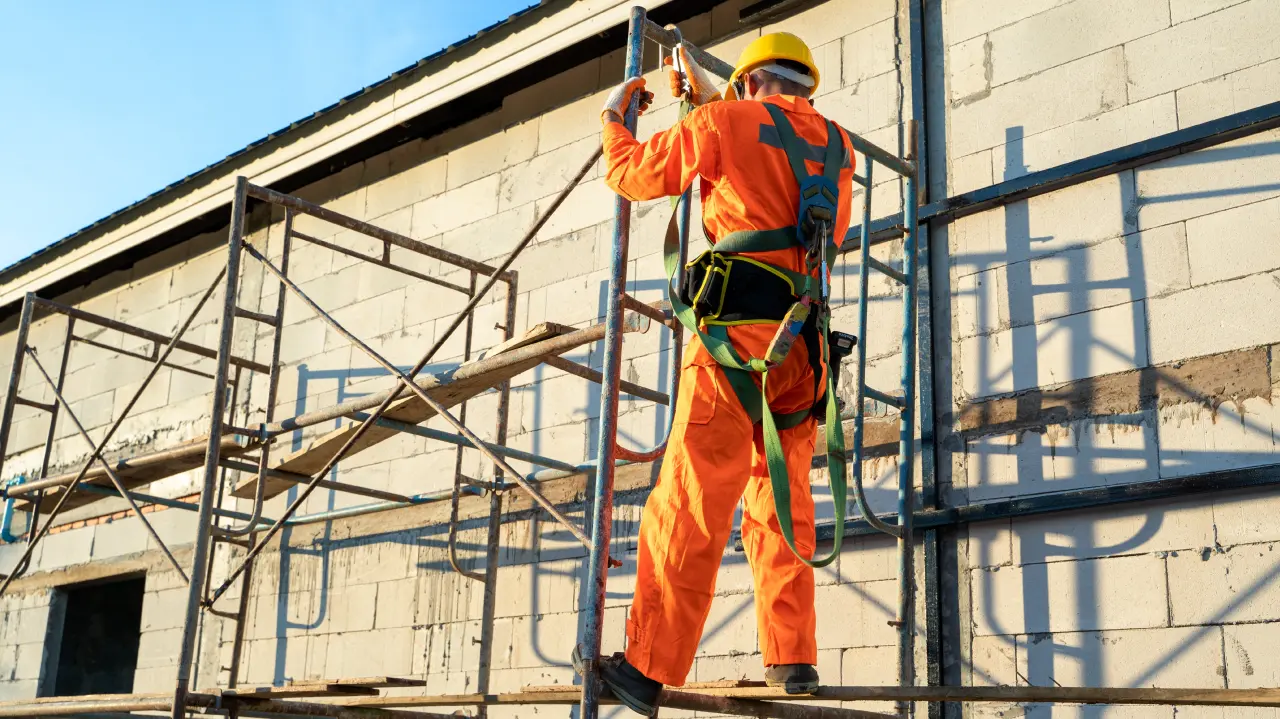
In construction, mining, and oil & gas, working at height is consistently among the most hazardous activities in any workplace. The International Labour Organization (ILO) has long identified falls from height as a leading cause of fatal and serious occupational injuries worldwide. Yet one of the most frequently overlooked root causes of those incidents does not happen on the job site, it happens much earlier, at the procurement desk.
Procurement mistakes when selecting height safety PPE are far more common than most organizations acknowledge. Budget pressure, limited technical knowledge, and poorly structured vendor selection processes regularly result in equipment that is unsuitable or outright dangerous, reaching workers in the field. This guide is written to help procurement teams, HSE professionals, and project managers recognize those pitfalls and build a smarter, safer buying process.
Many procurement processes still operate on a flawed assumption: that all full-body harnesses are essentially the same, and that the best procurement decision is simply the lowest price. This mindset is not just inefficient, it is potentially lethal.
Height safety PPE, including full body harnesses, lanyards, self-retracting lifelines (SRLs), anchor points, and integrated fall protection systems, is life-safety equipment. Unlike other PPE categories, such as safety helmets or protective footwear, a failure in a fall protection system offers no second chance. When a worker falls, and a harness buckle fails, or an anchor point gives way, the consequences can be fatal.
For this reason, procurement decisions involving height safety equipment must be treated with the same rigor as critical engineering decisions, not as routine administrative purchasing tasks.
One of the most dangerous procurement mistakes in height safety PPE buying is purchasing products without properly verifying their certification. In Indonesia and across global project environments, there are several key standards frameworks that procurement teams must understand:
The most common mistake here is accepting certification claims at face value from documents that cannot be independently verified. Unscrupulous vendors sometimes print standard numbers on product labels without ever completing a legitimate certification process. Procurement teams must proactively request a Certificate of Conformity from an accredited certification body, not just rely on labeling.
Choosing the right height safety PPE cannot be separated from a thorough understanding of the specific tasks and working environment involved. This is the area where wrong harness selection mistakes occur most frequently.
Consider this scenario: a company purchases a standard full-body harness for telecommunications tower inspection work, when the job actually requires a harness with dorsal, sternal, and lateral attachment rings to support rope access positioning. Or a bridge project buys a shock-absorbing lanyard without accounting for the fact that the available free-fall clearance is shorter than the lanyard’s full deployment length, meaning the worker could strike a lower structure before the system activates effectively.
Application factors that must be assessed before selecting height safety PPE include:
Even the best full-body harness on the market will fail to protect a worker if the anchor point is inadequate. Yet anchor points are consistently the most overlooked component in fall protection procurement.
International standards specify that anchor points used for fall arrest must be capable of withstanding defined minimum load requirements, the exact values vary depending on the applicable standard (EN or ANSI/OSHA). Beyond static strength, anchor points must also account for the direction of loading during a fall, because the resulting force is not always purely vertical.
A common procurement mistake is purchasing anchor devices separately without ensuring compatibility with the chosen harness and lanyard system, or leaving anchor point selection entirely to field contractors without clear technical guidance. The result is often improvised, unsafe anchoring in the field, a practice that has no place in any serious work at height safety program.
Procurement that focuses exclusively on upfront unit cost consistently underestimates the true total cost of ownership (TCO) for height safety PPE. Cost components that are frequently missed include:
The vendor selection process for height safety PPE should never be driven purely by price and commercial relationships. A genuinely competent fall protection supplier must be able to:
A tender process that only compares technical specifications on paper, without field verification or product demonstration, leaves a significant gap in responsible height safety PPE procurement.
Use the following checklist as a minimum framework for your organization’s height safety PPE procurement process:
| Verification Area | Key Question |
| Standards & Certification | Does the product hold verifiable EN, ANSI, or SNI certification from an accredited body? |
| Application Suitability | Do the product specifications match the specific task type and environmental conditions? |
| Fall Clearance | Is the available free-fall clearance sufficient for the selected system to function safely? |
| Anchor Point Compatibility | Has the anchor point been evaluated for strength, direction of load, and system compatibility? |
| Vendor Technical Competency | Does the vendor have genuine fall protection expertise, or are they purely a trading company? |
| Total Cost of Ownership | Has TCO been calculated, including inspection, training, and service life costs? |
| Service Life Documentation | Is there clear manufacturer documentation on service life limits and inspection intervals? |
| Post-Incident Protocol | Is there a defined procedure for PPE that has arrested a fall, including inspection and retirement? |
Understanding the regulatory and technical standards landscape is the foundation of responsible height safety PPE procurement. Ignorance of applicable requirements puts workers at risk and exposes companies and responsible individuals to serious legal consequences. Below is a structured overview of the national and international frameworks that matter most.
1. Law No. 1 of 1970 on Occupational Safety (Undang-Undang No. 1 Tahun 1970)
This is Indonesia’s primary occupational safety legislation. Article 3 explicitly requires the use of personal protective equipment to prevent falls. Any employer engaging workers in hazardous activities, including work at height, is legally obligated to provide appropriate PPE and ensure its correct use.
2. Minister of Manpower Regulation No. 9 of 2016 on OSH in Work at Height (Permenaker No. 9/2016)
This is the most specific and technically detailed regulation governing work at height in Indonesia. Permenaker 9/2016 defines work at height as any work performed at 1.8 meters or more above ground or floor level. Key provisions directly relevant to procurement include:
3. Minister of Manpower Regulation No. 8 of 2010 on Personal Protective Equipment (Permenaker No. 8/2010)
This regulation establishes employer obligations to provide standards-compliant PPE, conduct testing and/or certification, and ensure correct usage. Its provisions form the legal basis for responsible PPE procurement across all Indonesian workplace environments.
4. Standar Nasional Indonesia (SNI) – National Standards
The Badan Standardisasi Nasional (BSN) establishes and adopts technical standards for height safety PPE. Several relevant SNI standards are adopted from international frameworks, particularly EN, and cover construction requirements, testing methods, and marking for fall protection components. Procurement teams are advised to reference the current BSN SNI catalogue, as these standards are periodically updated to reflect international technical developments.
| Regulation / Standard | Scope | Procurement Relevance |
| Law No. 1/1970 | General occupational safety; PPE obligation | Legal basis for mandatory PPE provision |
| Permenaker No. 9/2016 | Work at height; fall protection systems | Technical requirements & inspection obligations |
| Permenaker No. 8/2010 | PPE certification & use in workplaces | Legal basis for testing & certification duty |
| SNI (via BSN) | Adoption of international technical standards for PPE | Minimum technical product requirements in Indonesia |
European Standards (EN), published by CEN (the European Committee for Standardization), represent the most comprehensive and globally adopted framework for fall protection equipment, including in Indonesia. EN-certified products have been independently tested by accredited Notified Bodies, making them among the most trustworthy certification marks available to procurement teams.
| Standard | PPE Component | Description & Key Requirements |
| EN 361:2002 | Full Body Harness | The primary standard for full-body harnesses. Specifies minimum static strength requirements and design criteria ensuring force is safely distributed across the body during arrest. |
| EN 354:2010 | Lanyard | Technical requirements for connecting lanyards between the harness and anchor point, covering strength and elongation testing. |
| EN 355:2002 | Energy Absorber / Shock Absorber | Governs energy-absorbing devices that reduce impact force on the body during a fall. The maximum permissible arrest force is defined within this standard. |
| EN 360:2002 | Self-Retracting Lifeline (SRL) | Standard for retractable lanyards that lock automatically during a fall. Covers locking speed, load testing, and overall system performance. |
| EN 362:2004 | Connectors / Karabiners | Requirements for karabiners and other connectors used in fall protection systems. Covers opening strength, automatic locking, and corrosion resistance. |
| EN 363:2008 | Fall Arrest System (Integrated) | The key standard governing the complete fall arrest system ensures compatibility and performance of all components when used together as a single system. |
| EN 365:2004 | Instructions for Use & Inspection | Establishes minimum requirements for instructions for use, maintenance, periodic examination, and repair. Highly relevant for post-procurement PPE lifecycle management. |
American standards are particularly relevant for projects with U.S. clients, multinationals operating in Indonesia, or sectors such as oil & gas that have historically adopted American frameworks.
| Standard | Component / System | Notes |
| ANSI/ASSP Z359.1 | Safety Requirements for Personal Fall Arrest Systems | The parent standard for fall arrest systems, covering harnesses, lanyards, and related components. The primary reference for many U.S. industries and international projects. |
| ANSI/ASSP Z359.11 | Full Body Harnesses | Specific technical requirements for full-body harnesses under the American standard, including strength and performance testing. |
| ANSI/ASSP Z359.13 | Personal Energy Absorbers & Lanyards | Covers requirements for shock-absorbing lanyards and energy absorbers within the American fall protection framework. |
| ANSI/ASSP Z359.14 | Self-Retracting Devices (SRD) | Dedicated standard for self-retracting lifelines and devices, including SRL-P (with rescue capability) and SRL-LE (leading edge applications). |
| OSHA 29 CFR 1926.502 | Fall Protection System Criteria (Construction) | U.S. federal regulation for fall protection in the construction industry. Frequently referenced by multinational project standards outside the U.S. |
The International Organization for Standardization (ISO) also publishes standards relevant to work at height safety. While EN standards provide more granular component-level detail, ISO 45001:2018 (Occupational Health and Safety Management Systems) is especially important from a procurement perspective. This standard requires organizations to systematically identify and control OHS risks, including falls from height, and document their control measures. Within the ISO 45001 framework, the selection of appropriate PPE is part of a legally documentable risk control obligation, not an informal purchasing decision.
Key Note for Procurement Teams: When a project requires compliance with multiple standards, for example, a client specifying ANSI while local regulations reference EN, always select products that satisfy the stricter requirement. Never assume that one certification automatically satisfies another. Consult with your HSE team and a qualified fall protection specialist before finalizing any purchasing decision.
Avoiding the mistakes outlined above requires building a structured, repeatable procurement process. The following best practices provide a solid starting framework:
Selecting the right height safety PPE is a decision that demands a combination of deep technical knowledge, regulatory fluency, and real field experience. For procurement and HSE teams who want to ensure every investment in safety equipment genuinely protects workers, not just satisfies a paper trail, working with an experienced fall protection specialist makes a significant difference.
Sebatek Indonesia supports companies in conducting a thorough fall protection needs assessment: from work-at-height risk analysis and system recommendations aligned with EN, ANSI, and SNI requirements, through to training programs and periodic inspection support. We believe effective safety starts with the right procurement decision.
Discuss your project’s fall protection requirements with our technical team at Sebatek, no commitment, no pressure, just practical guidance for the safety of your team.
Procurement mistakes in height safety PPE selection are not simply administrative errors, they are life-safety failures with serious legal, financial, and ethical consequences. By understanding the five core mistakes outlined in this guide and adopting a structured procurement checklist alongside the best practices described above, procurement officers, HSE managers, and project managers can meaningfully reduce the risk of serious falls in their operations.
When it comes to work at height safety, there is no room for compromise. The right equipment, from the right supplier, through the right procurement process, that is the foundation of a fall protection system that truly protects the people who depend on it.