WhatsApp
+62818-0847-5888
Work Hours
Monday to Friday: 9AM - 5PM
WhatsApp
+62818-0847-5888
Work Hours
Monday to Friday: 9AM - 5PM

 Byadmin
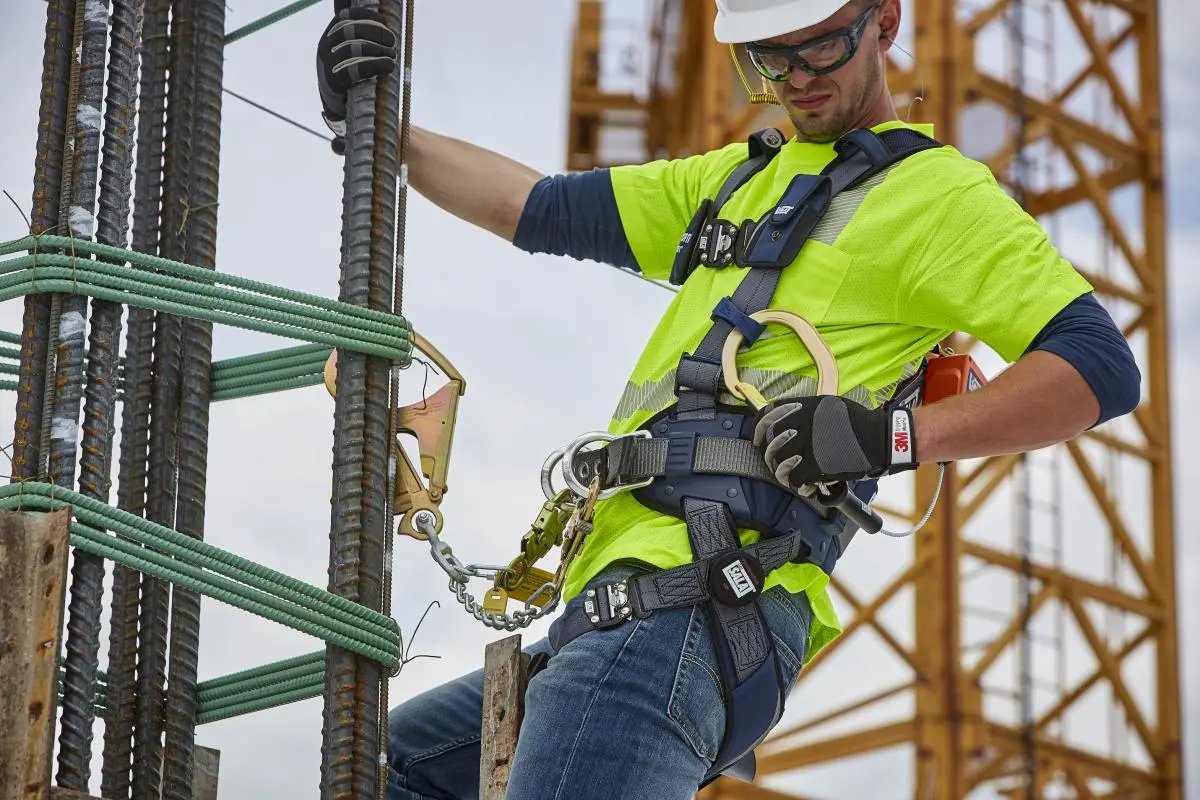
Construction safety harnesses are engineered for vertical fall arrest on scaffolding, rooftops, and open structures, prioritizing high anchorage loads and full-body protection. Manufacturing harnesses focus on restraint, positioning, and confined-space rescue in controlled industrial environments. Both must comply with OSHA 29 CFR 1926 or 1910 and meet ANSI/ASSE Z359 or EN 361 standards, but the design parameters, D-ring placement, and accessory compatibility differ significantly.
When it comes to personal fall arrest systems (PFAS), many safety managers make the critical mistake of treating construction and manufacturing environments as interchangeable. The reality is that fall hazards on a high-rise construction site differ fundamentally from those inside a chemical plant or an automotive assembly facility.
Choosing the wrong harness, even a certified one, can compromise worker safety, violate regulatory compliance, and expose your organization to significant liability. This guide breaks down the key differences between a construction safety harness and a manufacturing safety harness, so you can make informed, site-specific decisions.
Construction environments are characterized by constantly changing layouts, multiple trade workers operating simultaneously, and frequent work at height, from structural steel erection to roofing, scaffolding, and formwork. Fall distances can be significant, often exceeding 6 feet (1.8 meters) and sometimes reaching 30 feet or more on multi-story projects.
Key hazards in construction include: unguarded floor openings, leading edges, scaffold platforms, ladder operations, and aerial lifts. These conditions demand harnesses capable of withstanding high-energy falls and distributing arrest forces across the entire body.
Manufacturing environments, including automotive plants, food processing facilities, refineries, and warehouses, tend to have more defined and predictable work zones. However, they introduce unique challenges such as elevated catwalks, machinery maintenance at height, confined space entry, and chemical or heat exposure that can degrade harness materials.
In manufacturing, fall distances are often shorter, but the consequences of a fall near moving machinery or hazardous materials can be equally severe. Harness systems here often combine fall arrest with work positioning and rescue/retrieval capabilities.
The table below summarizes the most critical engineering and regulatory differences between the two categories:
| Parameter | Construction Safety Harness | Manufacturing Safety Harness |
| Primary Function | Fall arrest (PFAS) | Fall arrest + positioning + rescue |
| Anchorage Point Strength | Min. 5,000 lbf (22.2 kN) per ANSI Z359.1 | Min. 5,000 lbf (22.2 kN); rescue anchors rated higher |
| D-Ring Placement | Dorsal (back) D-ring standard | Dorsal + lateral + sternal rings common |
| Fall Distance Tolerance | Designed for longer free falls (6+ ft) | Often shorter falls; emphasis on limiting swing |
| Mobility Requirements | Dorsal + lateral + sternal rings are common | Moderate, often fixed workstation or gantry |
| Environmental Exposure | UV, rain, concrete dust, temperature swings | Chemicals, oils, heat, sparks, confined spaces |
| Webbing Material | Polyester (UV-resistant) | Polyester, Nomex, or Kevlar (heat/chemical grade) |
| Applicable Standards | OSHA 29 CFR 1926.502; ANSI Z359.11 | OSHA 29 CFR 1910.140; ANSI Z359.11/Z359.14 |
| Rescue/Retrieval | Less commonly integrated | Often includes chest/shoulder rings for hauling |
| Inspection Frequency | Daily + after each fall event | Daily + after chemical or heat exposure |
One of the most misunderstood aspects of fall protection is the selection of anchorage points. Whether in construction or manufacturing, OSHA mandates that any anchorage point used for a personal fall arrest system must be capable of supporting at least 5,000 pounds (22.2 kN) per worker attached, or be designed and certified by a qualified engineer.
In construction, anchorage is typically achieved through structural steel beams, embedded anchor bolts, or certified horizontal lifeline systems. The challenge lies in the fact that construction anchorages are often temporary and must be reconfigured as work progresses.
In manufacturing, permanent overhead anchor points are more common, installed on gantry systems, mezzanine beams, or purpose-built anchor tracks (horizontal rail systems). These engineered systems allow workers to move between work positions without unclipping, which is a major safety advantage in confined maintenance corridors or along assembly lines.
For rescue operations in manufacturing, particularly confined space entry under OSHA 29 CFR 1910.146, tripod-mounted rescue systems with retrieval winches are standard, requiring harnesses with sternal or chest D-rings rated for vertical extraction.
Regulatory compliance is non-negotiable in both environments, but the applicable standards vary by industry classification and geography.
For construction: OSHA 29 CFR 1926 Subpart M governs fall protection, with specific harness requirements under 1926.502. For general industry (manufacturing): OSHA 29 CFR 1910.140 applies, which was significantly updated in 2017 to align with ANSI Z359 standards. Both standards prohibit body belts as the sole means of fall arrest and require full-body harnesses for PFAS.
The ANSI Z359 fall protection code series is the most comprehensive voluntary standard framework in the U.S. Key standards include: Z359.1 for safety requirements for personal fall arrest systems; Z359.11 for full-body harness design and testing; Z359.12 for connecting components; and Z359.14 for self-retracting devices (SRDs). Compliance with ANSI Z359 is considered best practice and often required by large contractors and facility operators.
In the EU and Indonesia’s international procurement context, EN 361 governs full-body harnesses for fall arrest, while EN 358 covers work positioning belts and lanyards, and EN 1497/EN 1498 address rescue harnesses. Products sold in the EU must carry a CE marking verified by a Notified Body. When sourcing harnesses internationally, always verify which standard applies to your jurisdiction and intended use.
A harness that is technically compliant but ergonomically unsuitable will reduce worker productivity and, critically, increase the likelihood of workers bypassing safety equipment altogether.
Construction workers often wear harnesses for entire shifts across variable terrain. Lightweight, padded lumbar support and quick-connect buckles are prioritized. The harness must also accommodate additional PPE layers (high-visibility vests, arc-flash suits in some cases) and tool belts without restricting movement.
Manufacturing workers in fixed positions benefit from harnesses with side D-rings that allow comfortable work positioning, leaning into a work surface without full suspension. In paint booths or food processing areas, harnesses may need to resist chemical solvents or be easily decontaminated, making material selection and hardware coating (stainless vs. zinc-plated) a key consideration.
Both OSHA and ANSI Z359.1 require that all fall protection equipment be inspected before each use by the worker, and periodically by a competent person. However, the specific degradation factors differ between environments.
In construction, UV exposure, abrasion from concrete surfaces, and impact from dropped materials are the primary degradation risks. In manufacturing, chemical exposure (oils, solvents, acids) and heat damage (from welding spatter or steam) are more likely to compromise webbing integrity. Many manufacturers recommend retirement of harnesses after 5–10 years, but immediate retirement is required after any fall event or visible damage, regardless of age.
Organizations operating harness fleets should implement a documented inspection and tagging system recording purchase date, last inspection date, inspection results, and assigned user. Sebatek.id offers engineered fall protection solutions with compliance documentation support to simplify this process for both construction and manufacturing clients.
Selecting the right harness is only one part of a complete fall protection program. A fully engineered PFAS includes compatible connectors, lanyards or self-retracting devices, anchorage points, and a rescue plan, all matched to the specific hazards of your work environment.
Sebatek.id specializes in providing certified fall protection solutions tailored to the Indonesian construction and industrial sectors. Our technical team conducts site assessments, recommends OSHA/ANSI/EN-compliant equipment packages, and provides worker training to ensure your team stays protected and compliant, whether you’re managing a skyscraper project in Jakarta or maintaining equipment in a petrochemical facility in Cilegon.
The distinction between a construction safety harness and a manufacturing safety harness is not merely a matter of branding, it reflects genuinely different fall hazard profiles, regulatory requirements, anchorage conditions, and environmental exposures. Understanding these differences is the foundation of an effective, compliant fall protection program.
Whether your operation is scaling new heights on a construction site or maintaining critical equipment inside an industrial facility, investing in the right engineered fall protection solution protects your most valuable asset: your workforce.
Contact Sebatek today to schedule a site assessment and receive a customized fall protection recommendation for your construction or manufacturing environment.
Technically, a certified full-body harness meeting ANSI Z359.11 may be used in both environments, but it may not be optimally designed for manufacturing-specific needs such as work positioning, chemical resistance, or confined space rescue. Always conduct a task-specific hazard assessment before selecting a harness for cross-environment use.
Under OSHA 29 CFR 1926.502 and 1910.140, anchorage points must support at least 5,000 lbf (22.2 kN) per attached worker, or be designed by a qualified engineer to maintain a safety factor of at least two. This applies to both construction and manufacturing environments in the United States.
OSHA and ANSI Z359.1 require a visual and tactile inspection before each use by the worker, plus periodic formal inspections by a competent person, typically quarterly or as specified by the manufacturer. Any harness involved in a fall arrest event must be immediately removed from service, regardless of visible damage.
OSHA 29 CFR 1926 Subpart M applies to the construction industry and addresses fall protection for work at heights of 6 feet or more above a lower level. OSHA 29 CFR 1910.140 applies to general industry (manufacturing, warehousing, utilities) and covers personal fall protection systems with slightly different trigger heights and equipment specifications. Both require full-body harnesses for PFAS.
EN 361 is the European Standard specifying requirements and test methods for full-body harnesses used as components of personal fall arrest systems. Products bearing CE marking in compliance with EN 361 have been tested and verified by an EU-recognized Notified Body. This standard is commonly referenced in international procurement and is required for harnesses sold within the European Union.
© sebatek.id | Fall Protection Solutions for Construction & Industrial Sectors | Indonesia