WhatsApp
+62818-0847-5888
Work Hours
Monday to Friday: 9AM - 5PM
WhatsApp
+62818-0847-5888
Work Hours
Monday to Friday: 9AM - 5PM

 Byadmin
Fall-from-height workplace accidents are among the most serious incidents in the industrial sector. Unlike other types of workplace accidents, fall risks have direct consequences that can be fatal, ranging from permanent injuries to death. In Indonesia, the construction, manufacturing, telecommunications, and oil & gas sectors are high-exposure industries to work-at-height hazards. Although work-at-height safety standards are clearly regulated, accident statistics still indicate that many companies have not implemented adequate preventive measures.
This article comprehensively discusses the impact of fall-from-height workplace accidents—not only from the perspective of worker safety, but also the operational, financial, and reputational implications that companies must bear.
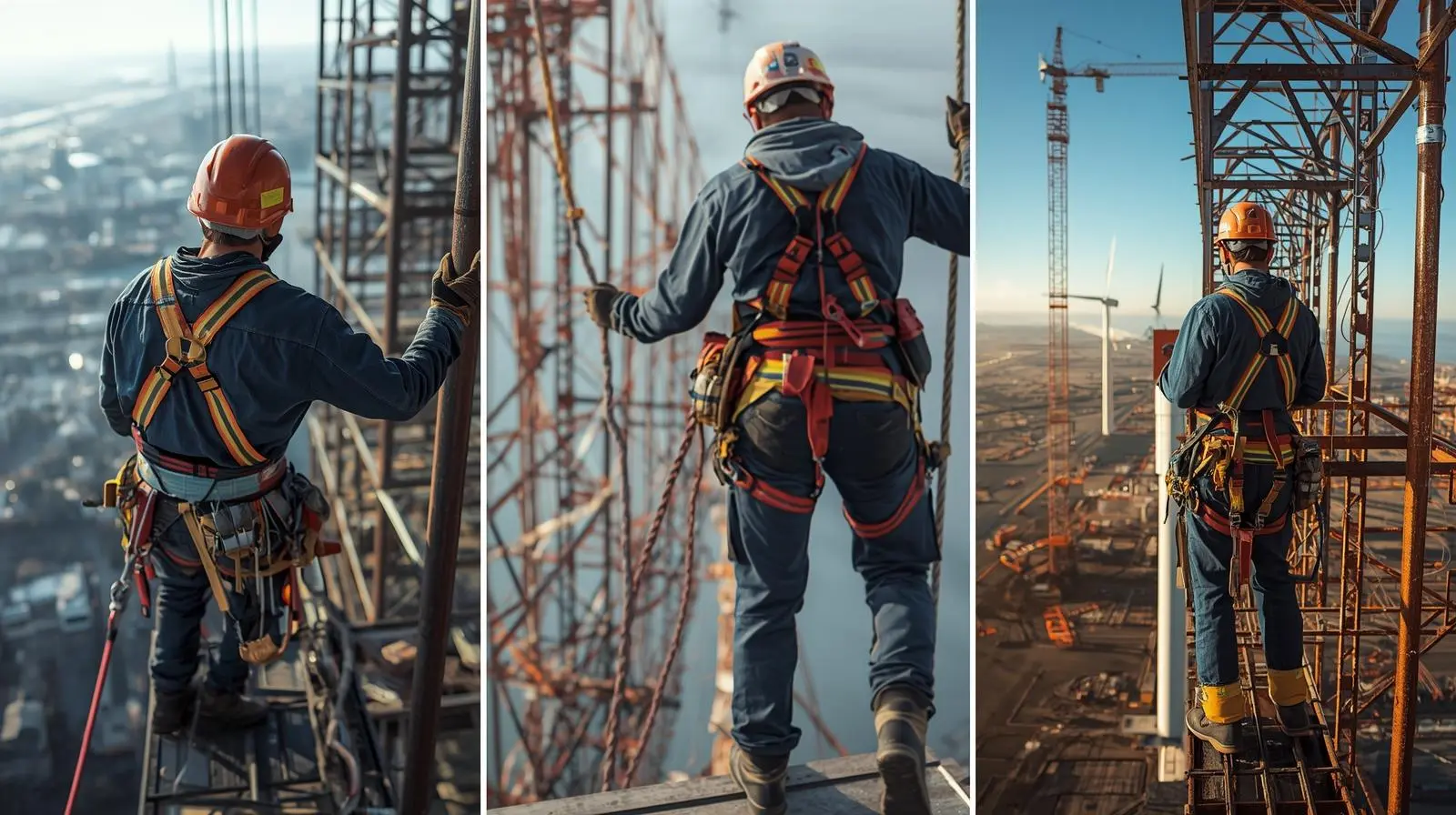
Fall-from-height workplace accidents are considered high risk because they involve a combination of gravity, limited movement space, and exposure levels that are often continuous. Work such as steel structure installation, tower installation, industrial tank maintenance, or access to production facility roofs requires workers to be in unstable areas for extended periods.
The minimum height considered risky is 1.8 meters, where the impact of a fall can already cause serious injury. The higher the work position, the greater the kinetic energy generated when the body falls, meaning the more severe the potential injuries that occur.
What makes this risk even more complex are environmental factors: strong winds, slippery surfaces, poor lighting, or limited access for emergency evacuation. Without proper fall protection systems, one small mistake can lead to major consequences.
Injuries from falls from height vary greatly, depending on body position during the fall and the surface struck. The most common types of injuries include:
Even with quick medical treatment, many fall accident victims experience permanent disabilities that drastically change their quality of life.
Beyond immediate physical injuries, workers who survive fall accidents often face long-term complications such as chronic pain, mobility disorders, or functional limitations that prevent them from returning to work in the same field. The rehabilitation process can take months or even years, with ongoing costs.
Post-accident psychological trauma should not be ignored. Many workers who have experienced fall accidents develop extreme anxiety about heights, post-traumatic stress disorder (PTSD), or loss of confidence in working. This condition not only affects productivity but also long-term mental well-being.
Companies experiencing fall-from-height workplace incidents will face significant cost burdens:
In fatal cases, compensation values can reach hundreds of millions to billions of rupiah, not including indirect costs that are often far greater.
When an accident occurs, activities at the work site are usually temporarily halted for investigation. This process can take days or even weeks, depending on the severity of the incident. The impacts include:
Companies proven negligent in providing workplace safety systems can face legal sanctions in accordance with applicable labor and occupational safety regulations. These sanctions can include:
In an era of information transparency, one serious workplace accident can permanently damage a company’s reputation. Clients, business partners, and investors will question the company’s commitment to safety. In competitive industries, a poor safety track record can become a primary reason for losing contracts.
Fall-from-height workplace accidents often indicate that a company’s occupational safety management system is not functioning well. Work-at-height safety standards, whether referring to national regulations or international standards such as ISO 45001, emphasize the principle of risk control hierarchy.
Companies that fail to implement these standards not only violate legal obligations but also lose trust from external auditors, corporate clients, and certification bodies. In large project tenders, occupational safety compliance track records become one of the main selection criteria.
The most fundamental problem is the absence of fall prevention systems in the workplace. Many companies still rely on individual worker awareness without providing adequate safety infrastructure, such as guardrails, safety nets, or standardized anchor points.
Even when companies already provide industrial safety harnesses, errors still occur due to:
Untrained workers do not understand safe work procedures at height. They don’t know how to identify hazards, inspect equipment, or perform self-rescue in emergency situations. Training is not just about theory, but also practical simulations that build muscle memory.
Human factors remain a major contributor. Fatigue, lack of focus, or attitudes that underestimate risk (“it’s routine”) cause workers to take dangerous shortcuts. Without strict supervision and a strong safety culture, human error will continue to occur.
Fall prevention in the workplace is not about one tool or one procedure—but about an integrated and continuous system.
Every work at height must begin with risk analysis. Identify potential hazards, evaluate risk levels, and determine appropriate controls. Good risk assessment involves field observation, consultation with workers, and clear documentation.
Anchor points must be designed and installed by competent technicians, with load capacity according to standards (generally a minimum of 2,200 kg for one person). Lifelines must be inspected before use and replaced if they show signs of wear.
Selection of full-body harnesses must be adjusted to the type of work, work duration, and environmental conditions. Ensure every component of the fall arrest system—harness, lanyard, shock absorber, and connector—is compatible and well-maintained.
Prevention systems must be evaluated periodically. Safety audits, equipment inspections, and refresher training need to be scheduled regularly. Feedback from field workers is also important for continuous improvement.
PT. Sebatek Prima Tunggal, as a manufacturer of industrial workplace safety equipment in Indonesia, understands that a reliable fall protection system is a long-term investment for the sustainability of company operations. With experience in providing work-at-height safety solutions, Sebatek remains committed to supporting Indonesian industries in implementing high safety standards through quality products and continuous education.
The impact of fall-from-height workplace accidents covers a broad spectrum, from human tragedy to massive business losses. No company is immune to this risk, but all companies have the choice to prevent it.
Workplace safety is not a cost burden, but a strategic investment. Companies that prioritize fall prevention in the workplace not only protect their human assets but also build a stronger operational foundation, better reputation, and long-term business sustainability.
An effective fall protection system, comprehensive training, and a strong safety culture are a non-negotiable combination. Because ultimately, every worker deserves to go home safely—and every preventable accident is an accident that should never have happened.