WhatsApp
+62818-0847-5888
Work Hours
Monday to Friday: 9AM - 5PM
WhatsApp
+62818-0847-5888
Work Hours
Monday to Friday: 9AM - 5PM

 Byadmin
A Comprehensive Guide for HSE Professionals, Engineers, and Procurement Teams
Industrial work at height remains one of the most hazardous activities across manufacturing, construction, energy, and logistics sectors. Understanding what constitutes an effective fall protection system is not merely a compliance requirement. It is a fundamental responsibility that protects human lives, reduces liability, and ensures operational continuity.
This guide provides industrial professionals with clear, actionable insights into fall protection systems, their components, regulatory frameworks, and implementation best practices.
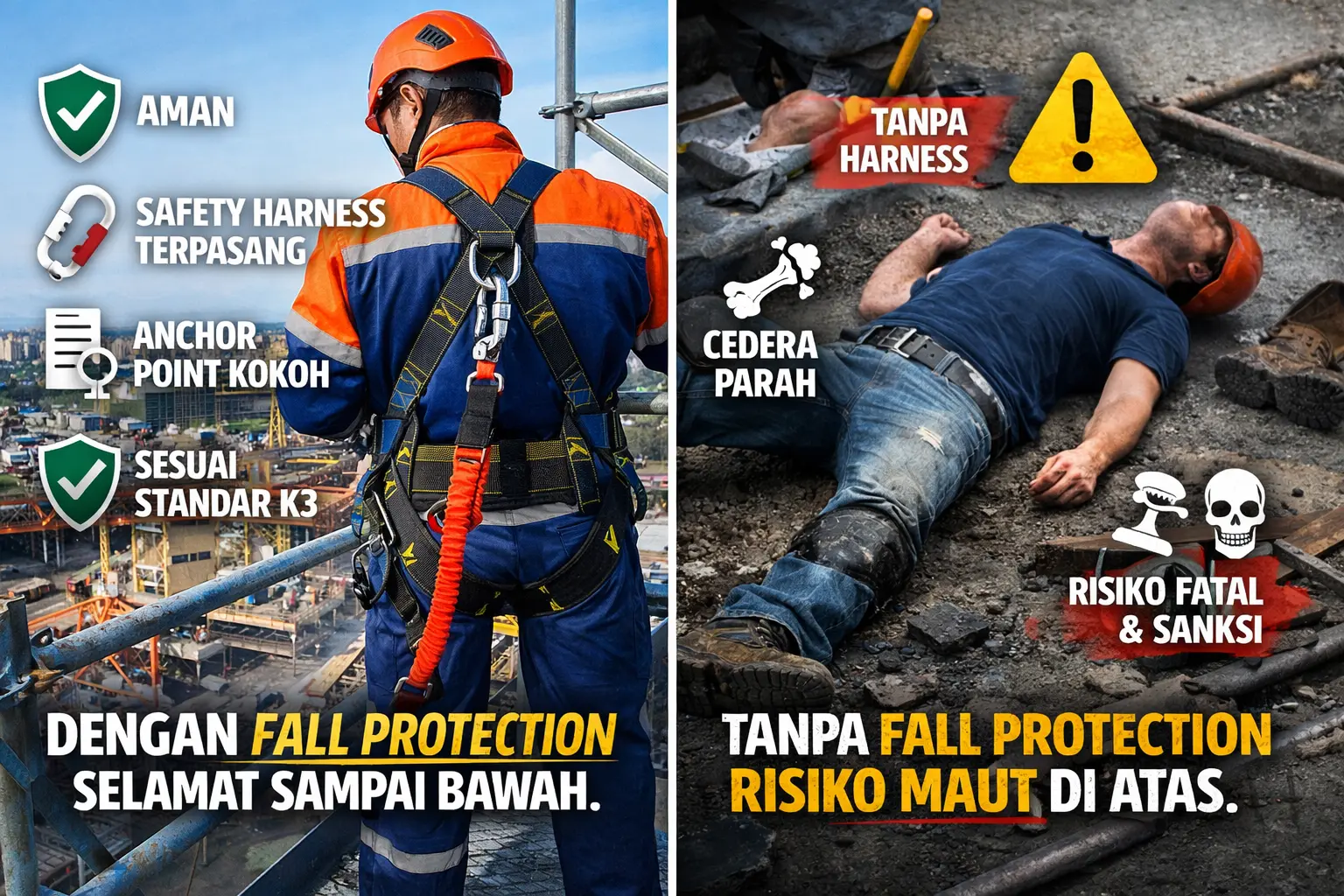
A fall protection system is an integrated assembly of equipment, procedures, and training designed to prevent workers from falling from elevated positions or to arrest falls safely when they occur. These systems form the critical safety infrastructure for any operation involving work at height, typically defined as work performed 1.8 meters (6 feet) or more above a lower level.
In industrial contexts, a fall protection system encompasses both physical equipment (guardrails, harnesses, anchor points) and administrative controls (training programs, rescue plans, inspection protocols). The primary objective is to eliminate fall hazards through the hierarchy of controls: elimination, passive protection, active protection, and administrative measures.
Modern industrial fall protection has evolved beyond simple compliance checkboxes. Today’s systems integrate engineering principles, ergonomic design, and predictive safety analytics to create comprehensive working at height safety systems that adapt to complex operational environments.
Industrial fall protection generally categorizes into two primary approaches: passive and active systems. Understanding the distinction is essential for proper hazard assessment and system selection.
Passive fall protection refers to systems that do not require worker action or specialized equipment to function. These systems provide continuous protection without active participation from the worker.
Common passive systems include:
– Guardrail Systems: Permanent or temporary barriers installed along elevated edges, platforms, and walkways. These prevent falls through physical barriers and require no training or equipment for workers.
– Safety Nets: Mesh systems installed below work areas to catch falling personnel or debris. Frequently deployed in construction and bridge work where other systems prove impractical.
– Hole Covers: Secure coverings for floor openings, skylights, and shafts that eliminate fall hazards through surface integrity.
– Warning Lines: Designated barriers marking safe work zones near unprotected edges, typically used in conjunction with other controls.
Passive systems represent the preferred control method in the hierarchy of fall protection because they protect multiple workers simultaneously and eliminate human error factors.
Active fall protection requires worker engagement with specialized equipment and proper training. These systems divide into two subcategories:
Fall Prevention Systems (Restraint):
– Travel Restraint Systems: Positioning devices that prevent workers from reaching fall hazards. These systems restrict movement range using lanyards or adjustable ropes connected to anchor points.
– Positioning Device Systems: Equipment allowing workers to sit back in harnesses while keeping both hands free for work, common in tower climbing and window washing.
Fall Arrest Systems:
– Personal Fall Arrest Systems (PFAS): Complete assemblies including body harnesses, connectors, lanyards, deceleration devices, and anchorages. These systems activate during a fall event to arrest descent and limit impact forces.
– Self-Retracting Lifelines (SRLs): Devices that automatically extend and retract with worker movement, arresting falls within inches through internal braking mechanisms.
Active systems provide flexibility for dynamic work environments but demand rigorous training, inspection protocols, and rescue planning.
Understanding individual components enables better system design, maintenance, and troubleshooting. A comprehensive fall arrest system comprises several critical elements:
Anchorages serve as secure attachment points for personal fall protection equipment. Industrial anchorages must support minimum loads of 5,000 pounds per worker attached (OSHA requirement) or maintain safety factors of at least two under ANSI standards. Types include:
– Fixed Anchor Points: Permanent installations on structural steel, concrete, or roofing systems
– Temporary Anchorages: Portable devices for short-duration tasks
– Horizontal Lifelines: Cable systems spanning work areas allowing lateral movement
Full-body harnesses distribute fall arrest forces across thighs, pelvis, chest, and shoulders. Modern harnesses feature quick-connect buckles, moisture-wicking materials, and tool-carrying capabilities. Selection criteria include:
– Proper fit for worker body types
– Appropriate D-ring configurations (dorsal for arrest, sternal for rescue, side for positioning)
– Industry-specific features (arc flash resistance, chemical protection)
These elements link harnesses to anchorages and include:
– Shock-Absorbing Lanyards: Flexible connections with built-in deceleration packs reducing impact forces below 1,800 pounds
– Self-Retracting Lifelines: Offer shorter free-fall distances and faster arrest times than lanyards
– Rope Grabs: Mobile attachments allowing vertical movement on fixed ladders or ropes
Post-fall rescue capability is non-negotiable. Suspension trauma can cause serious injury or death within 15-30 minutes of hanging in a harness. Essential rescue components include:
– Rescue ropes and pulley systems
– Descent control devices
– Pre-rigged rescue kits for immediate deployment
Global industrial operations must navigate multiple regulatory frameworks. Understanding these standards ensures compliance across jurisdictions and demonstrates organizational commitment to safety excellence.
The United States enforces fall protection through 29 CFR 1926 (construction) and 29 CFR 1910 (general industry). Key provisions include:
– Mandatory fall protection at heights of 6 feet in construction, 4 feet in general industry
– Requirement for competent persons to supervise fall protection implementation
– Specific standards for scaffolding, ladders, steel erection, and aerial lifts
OSHA emphasizes the hierarchy of controls, requiring employers to evaluate the feasibility of guardrails and safety nets before resorting to personal fall arrest systems.
ANSI provides voluntary consensus standards that often exceed OSHA minimums and become industry benchmarks:
– ANSI Z359: Comprehensive fall protection code covering design, testing, and use of equipment
– ANSI A10: Construction safety standards, including fall protection requirements
ANSI standards address equipment specifications, system design criteria, and training requirements with greater technical detail than OSHA regulations.
For multinational operations, ISO 45001 (Occupational Health and Safety Management Systems) provides frameworks for systematic fall hazard management. Specific technical standards include:
– ISO 10333: Personal fall arrest systems testing and performance requirements
– ISO 14567: Single-point anchor devices specifications
The ILO Convention 167 (Safety and Health in Construction) and accompanying recommendations establish minimum international standards for working at height safety systems. These frameworks influence national legislation in developing economies and guide multinational corporations in establishing baseline safety protocols across global operations.
Fall protection requirements vary significantly across industrial sectors. Tailoring systems to specific operational contexts ensures both safety and productivity.
Construction presents dynamic fall hazards with constantly changing work environments. Multi-story buildings, bridges, and infrastructure projects require:
– Temporary guardrail systems during structural steel erection
– Safety nets for high-rise concrete work
– Comprehensive personal fall arrest systems for roofing operations
The temporary nature of construction demands modular, adaptable fall protection solutions that can relocate as projects progress.
Industrial facilities combine permanent elevated platforms with maintenance access requirements. Key applications include:
– Permanent guardrail systems on elevated walkways and platforms
– Overhead anchor systems for machinery maintenance
– Confined space entry equipment integrating fall protection
Chemical processing and food manufacturing require corrosion-resistant materials and washdown-compatible equipment.
Wind energy, oil and gas, and electrical utilities present unique challenges:
– Wind Turbines: Internal ladder systems with vertical fall arrest rails, nacelle work positioning systems
– Oil and Gas: Derrick climbing equipment, platform perimeter protection, confined space rescue systems
– Electrical Utilities: Arc flash-rated harnesses, hot stick work positioning, bucket truck fall protection
Modern distribution centers with multi-level racking systems require:
– Dock door fall protection
– Mezzanine safety gates
– Order picker fall arrest systems
– Rack climbing protection for maintenance personnel
Even well-intentioned fall protection programs fail due to recurring implementation errors. Awareness of these pitfalls prevents costly incidents and compliance violations.
Many organizations deploy equipment without comprehensive hazard analysis. Effective assessment must evaluate:
– All elevated work locations and access routes
– Environmental factors (weather, lighting, surface conditions)
– Task-specific requirements and duration
– Rescue feasibility for each work area
Mixing components from different manufacturers without compatibility verification creates system failures. Carabiners, hooks, and connectors must meet dimensional and strength requirements for intended connections.
Providing equipment without competency-based training results in improper use. Workers must understand:
– Equipment inspection procedures
– Proper donning and adjustment techniques
– System limitations and capacity ratings
– Emergency response protocols
Organizations frequently invest in fall arrest without viable rescue capabilities. Every location using active fall protection requires documented rescue procedures, trained personnel, and appropriate equipment accessible within suspension trauma timeframes.
Fall protection equipment requires regular inspection, maintenance, and retirement protocols. Damaged webbing, corroded hardware, and outdated equipment create hidden failure points.
Selecting appropriate fall protection systems requires systematic evaluation across technical, operational, and economic dimensions.
Before specifying equipment, verify that fall hazards cannot be eliminated through process redesign, mechanical aids, or ground-level work positioning.
Evaluate permanent guardrails, safety nets, or warning line systems. Passive protection generally offers lower long-term costs and higher reliability than active systems.
When active systems prove necessary, specify based on:
– Work Environment: Indoor/outdoor, corrosive conditions, temperature extremes
– Task Characteristics: Mobility requirements, work positioning needs, frequency of use
– User Population: Worker size ranges, physical demands, skill levels
– Integration Requirements: Compatibility with existing PPE, communication devices, tools
Select manufacturers with demonstrated compliance with ANSI, ISO, and regional standards. Evaluate warranty terms, technical support availability, and training resources.
Beyond initial equipment costs, consider:
– Installation and engineering expenses
– Training program development
– Inspection and maintenance protocols
– Equipment lifecycle and replacement schedules
Frequently Asked Questions
What height requires fall protection in industrial settings?
OSHA mandates fall protection at 6 feet for construction and 4 feet for general industry. However, best practice suggests evaluating fall hazards at any elevation where injury risk exists, regardless of regulatory thresholds. Many organizations implement protection at 3 feet or lower for maximum safety.
What is the difference between fall arrest and fall restraint?
Fall restraint systems prevent workers from reaching fall hazards, eliminating the possibility of falling. Fall arrest systems allow workers to reach edges but activate to stop falls after they begin. Restraint is preferable when feasible; arrest systems require additional training, equipment, and rescue capabilities.
How often must fall protection equipment be inspected?
OSHA requires pre-use inspections by competent persons before each use. Formal documented inspections should occur at least annually, or more frequently based on manufacturer recommendations and usage severity. Equipment subjected to falls or impacts must be immediately removed from service.
Who is considered a competent person for fall protection?
A competent person possesses the training and experience to identify hazards and has the authority to take corrective measures. This designation requires specific fall protection training beyond general safety awareness, including system design knowledge and regulatory understanding.
What constitutes a qualified anchor point?
Qualified anchor points must support 5,000 pounds per attached worker or maintain a safety factor of two under ANSI standards. Engineered systems with proper documentation may use alternative criteria based on professional engineering analysis. Never use standard guardrails, vents, or piping as anchor points unless specifically engineered for that purpose.
Implementing effective fall protection systems requires technical knowledge, regulatory awareness, and operational commitment. By understanding system types, component requirements, and implementation best practices, industrial professionals create safer work environments while maintaining productivity.
The investment in comprehensive fall protection yields returns through reduced incident rates, lower insurance costs, regulatory compliance, and, most importantly, preserved human life. As work at height continues across global industries, prioritizing fall protection system excellence remains an unwavering professional obligation.
© sebatek.id | Apa Itu Fall Protection System dalam Industri? | Indonesia