WhatsApp
+62818-0847-5888
Work Hours
Monday to Friday: 9AM - 5PM
WhatsApp
+62818-0847-5888
Work Hours
Monday to Friday: 9AM - 5PM

 Byadmin
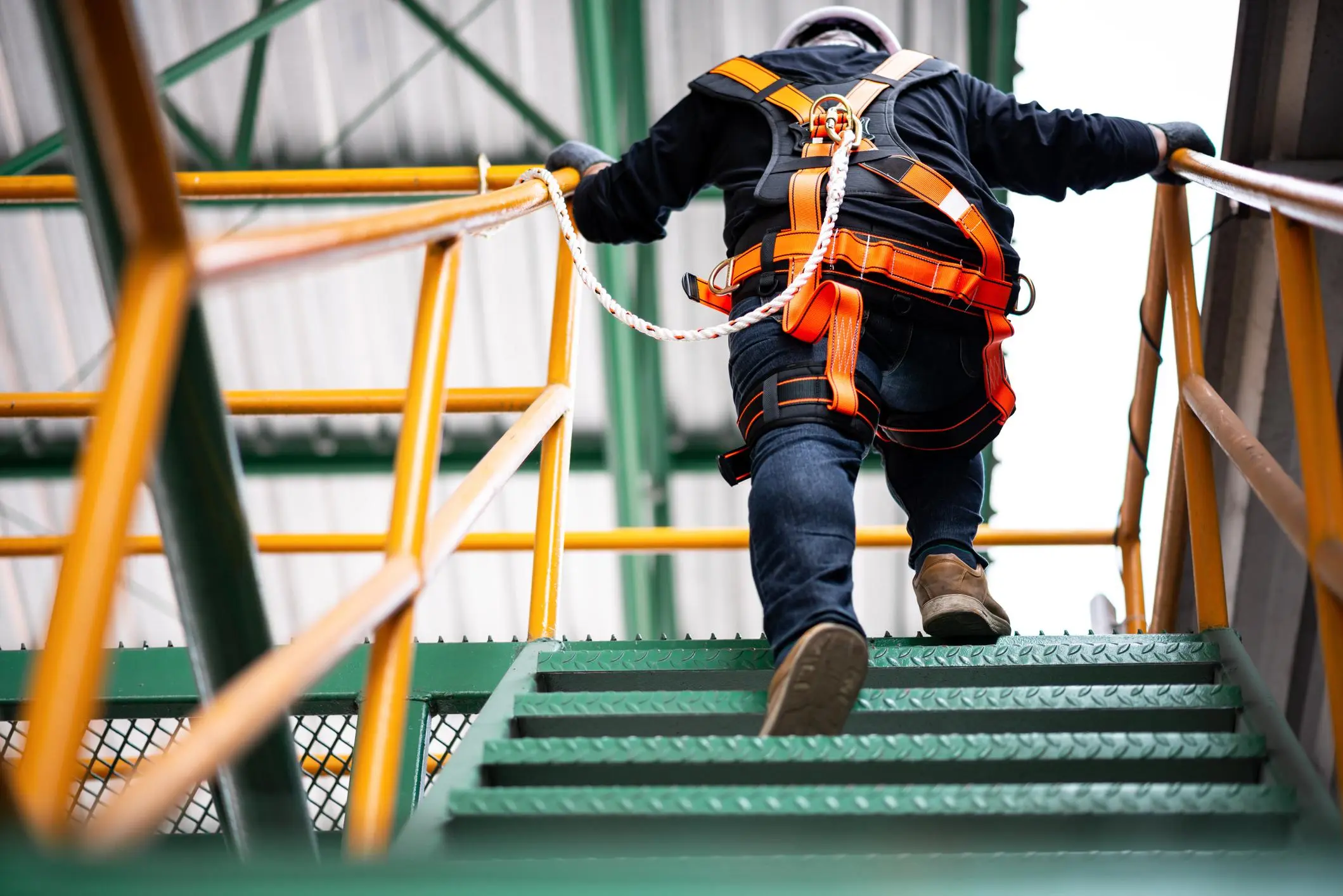
A safety harness is a personal protective equipment (PPE) system designed to prevent serious injury or death from falls in industrial environments. Unlike basic restraint belts, a modern safety harness distributes fall arrest forces across multiple body anchor points, typically the shoulders, chest, waist, and thighs to minimize trauma during sudden deceleration events.
In industrial operations ranging from construction and oil & gas to warehousing and utilities maintenance, the safety harness serves as the critical interface between the worker and a broader fall protection system. Understanding its design, function, and proper integration into engineered safety protocols is essential for occupational health and safety professionals.
The primary function of a safety harness is to arrest a fall while keeping impact forces within survivable physiological limits. When a worker falls, kinetic energy builds rapidly. Without proper distribution, this energy concentrates at single points on the body, causing severe internal injuries, spinal damage, or equipment failure.
A properly designed harness redirects these forces through load-bearing webbing made from high-tensile synthetic fibers, commonly polyester or nylon, that maintain structural integrity under shock loading. The harness connects to anchor points, lanyards, or self-retracting lifelines, forming a complete fall protection assembly engineered to limit free fall distance and arrest force.
Beyond fall arrest, harnesses also enable:
Work positioning: Allowing workers to lean back and use both hands while elevated, common in tower climbing and façade work.
Suspension relief: Providing post-fall trauma straps that reduce suspension trauma risk by enabling blood circulation while awaiting rescue.
Rescue operations: Serving as attachment points for retrieval systems in confined spaces or elevated rescue scenarios.
Understanding harness components helps clarify how the system achieves its protective function:
Webbing straps form the foundational structure. Engineered from synthetic polymer fibers, these straps must withstand tensile loads exceeding several thousand pounds while remaining lightweight and flexible enough for daily wear. The material’s resistance to abrasion, UV degradation, and chemical exposure directly impacts service life in harsh industrial environments.
D-rings serve as connection points, typically constructed from forged steel or aluminum alloy. The dorsal D-ring, positioned between the shoulder blades, is the most common fall arrest attachment point due to optimal force distribution and reduced injury risk. Frontal, side, and sternal D-rings enable work positioning and ladder climbing applications.
Buckles and adjusters allow proper fitting across different body types. Precision fit is non-negotiable—loose harnesses increase fall distances and shift during impact, while overly tight configurations restrict movement and circulation.
Sub-pelvic straps pass under the legs and thighs, creating a seat-like support structure that prevents the wearer from slipping out during inversion or extended suspension.
A harness alone does not constitute fall protection. It functions as one component within an engineered hierarchy:
Anchorage points must provide structural strength sufficient to support fall arrest loads—typically rated at 5,000 pounds per attached worker. These may be permanent building features, temporary anchor devices, or mobile systems depending on the work environment.
Connectors link the harness to anchorage. Energy-absorbing lanyards extend and tear at controlled rates during fall events, limiting peak forces transmitted to the body. Self-retracting lifelines provide continuous fall protection while allowing vertical and horizontal mobility.
Fall clearance calculations determine whether sufficient distance exists below the work area to arrest a fall before ground contact. This engineering analysis accounts for lanyard length, deceleration distance, harness stretch, and worker height.
Manufacturers specializing in synthetic lifting and safety solutions—such as PT. Sebatek Prima Tunggal, an Indonesian manufacturer with expertise in engineered fiber systems—apply materials science principles to develop components that balance strength, durability, and ergonomic performance across these interconnected elements.
The shift from leather and natural fiber to synthetic polymers revolutionized harness reliability. Modern polyester webbing offers superior tensile strength-to-weight ratios, minimal elongation under static loads, and excellent resistance to moisture and mildew.
Nylon alternatives provide greater elasticity, beneficial in dynamic load scenarios, though more susceptible to UV degradation without proper treatment. Manufacturing processes now incorporate UV inhibitors and coating technologies that extend service life in outdoor applications.
The strength of these synthetic materials enables thinner, lighter harness designs without compromising safety factors—typically engineered with breaking strengths four to five times the maximum anticipated arrest force. This durability mindset, rooted in engineering rather than simple compliance, drives innovation in industrial PPE development.
Even the most advanced harness systems degrade through use and environmental exposure. Comprehensive inspection protocols before each use and detailed periodic examinations are fundamental to maintaining protective function.
Visual and tactile inspections identify frayed webbing, damaged stitching, bent or corroded hardware, and chemical contamination. Any harness subjected to fall arrest forces must be immediately removed from service, as internal fiber damage may not be visually apparent but critically compromises strength.
Documentation systems tracking manufacture dates, inspection records, and usage history enable data-driven retirement decisions. Most manufacturers recommend retirement within five years of first use, though harsh conditions may necessitate earlier replacement.
Different industrial applications demand specialized harness designs:
Construction and steel erection typically employ full-body harnesses with multiple D-ring positions for versatility across climbing, positioning, and fall arrest scenarios.
Confined space entry requires harnesses with shoulder and hip D-rings facilitating vertical rescue extraction by external retrieval systems.
Wind turbine maintenance utilizes harnesses integrated with rescue and descent devices, acknowledging the challenges of evacuating injured workers from nacelles and towers.
Utility and telecommunications favor lightweight designs balancing protection with the mobility needed for extended pole and tower work.
These variations reflect the principle that effective fall protection results from matching equipment capabilities to specific hazard profiles and work methods.
The safety harness represents a critical evolution in worker protection—transforming fall hazards from typically fatal events into survivable incidents through engineered force management. Its function extends beyond simple restraint to encompass integrated fall arrest, work positioning, and emergency response capabilities.
As industrial operations advance in complexity and height, the role of precisely engineered synthetic materials and systems-thinking in harness design becomes increasingly vital. Organizations committed to worker safety recognize that harnesses are not commodity items but sophisticated PPE requiring careful selection, proper training, rigorous maintenance, and integration within comprehensive fall protection programs