WhatsApp
+62818-0847-5888
Work Hours
Monday to Friday: 9AM - 5PM
WhatsApp
+62818-0847-5888
Work Hours
Monday to Friday: 9AM - 5PM

 Byadmin
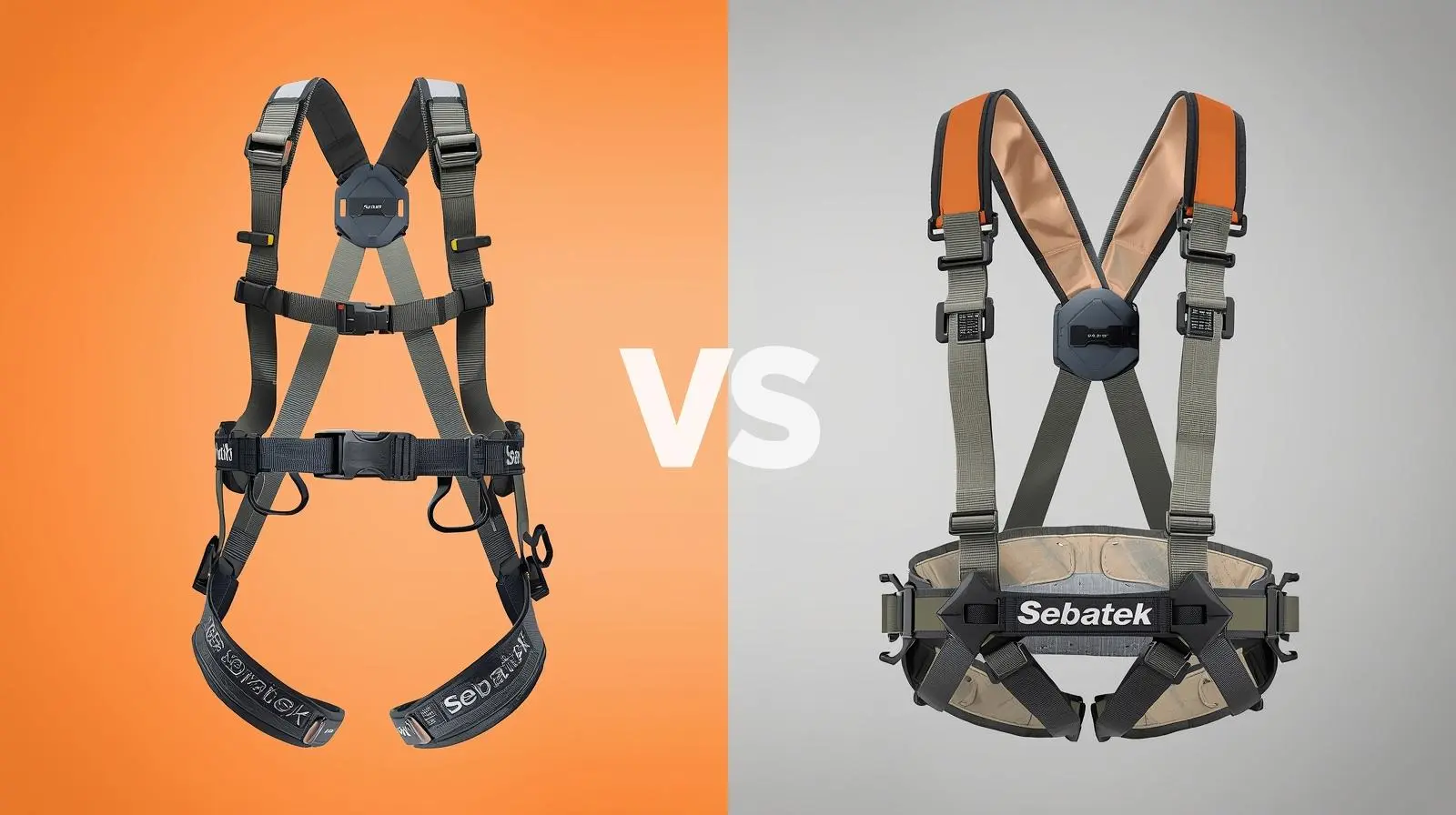
The critical difference: A safety harness distributes fall arrest forces across the entire body (shoulders, chest, pelvis, thighs), while a safety belt concentrates force around the waist, which can cause severe internal injuries or death during a fall. Modern fall protection standards have largely phased out safety belts for fall arrest due to documented fatalities from organ damage and spinal compression.
When working at height, the equipment strapped to your body becomes the last line of defense between life and serious injury. Yet, many industrial sites still confuse safety harnesses with safety belts—or worse, use them interchangeably.
The distinction is not merely technical. It is physiological and potentially life-saving.
A full body harness is a comprehensive fall protection system designed to arrest falls by distributing impact forces across multiple anchor points on the body. A safety belt, by contrast, is a waist-level restraint device that was once common but is now considered unsafe for fall arrest applications.
| Criteria | Safety Harness (Full Body) | Safety Belt |
| Structure | Straps around shoulders, chest, waist, and thighs with dorsal D-ring | Single strap around waist with side or rear attachment |
| Protection Level | High – designed for fall arrest | Low – not suitable for fall arrest |
| Load Distribution | Distributed across shoulders, pelvis, and thighs | Concentrated at waist and lower spine |
| Risk Level | Minimized internal injury risk | High risk of abdominal trauma, spinal injury, suspension trauma |
| Industry Standard Usage | Required for fall arrest systems in construction, oil & gas, tower work | Restricted to positioning or travel restraint only |
A safety harness is a full-body wearable system engineered to catch and suspend a worker safely if a fall occurs. The design incorporates multiple strap connections that wrap around the torso, shoulders, and upper legs.
When a fall happens, the lanyard attached to the dorsal D-ring (located between the shoulder blades) engages. The sudden deceleration force is then absorbed by:
This multi-point distribution prevents the force from concentrating on any single part of the body. The result is a controlled arrest that keeps the worker upright and conscious, reducing the risk of suspension trauma and secondary injuries.
A safety belt is a single-strap device that wraps around the waist, similar to the belts used in vehicle restraint systems or older construction practices. Historically, these were common on construction sites before research revealed their dangers.
In the mid-20th century, safety belts were standard issue for workers at height. They were simple, inexpensive, and easy to don. However, accident data from the 1970s and 1980s revealed a disturbing pattern: workers who fell while wearing safety belts often died—not from the fall itself, but from internal injuries caused by the belt.
Modern safety standards restrict safety belts to two non-fall-arrest functions:
Work positioning: Holding a worker in place while both hands are free (e.g., utility pole work), but only when the risk of free fall is eliminated by other means.
Travel restraint: Preventing a worker from reaching a fall hazard entirely, so no fall can occur.
Safety belts must never be used as the primary fall arrest device.
Understanding what happens to the human body during a fall arrest reveals why equipment choice matters so critically.
When a worker falls and the belt engages:
Studies have documented fall arrest forces ranging from 900 to 1,800 pounds depending on free fall distance and lanyard type. Concentrating this force on the waist creates injury mechanisms similar to high-speed vehicle collisions.
The same fall, arrested by a properly fitted harness:
The difference in survival and injury outcomes is dramatic and well-documented across decades of incident data.
The phase-out of safety belts for fall protection stems from clear evidence:
Accident investigation reports consistently identified safety belt use as a contributing factor in fall-related deaths, even when the belt successfully stopped the fall. Cause of death was often listed as internal injuries or asphyxiation rather than impact trauma.
Even if the initial fall is survived, prolonged suspension in a belt creates a dangerous condition called suspension trauma. Blood pools in the legs, the belt compresses major blood vessels, and the worker can lose consciousness within minutes. Rescue delays become fatal.
Biomechanical testing demonstrates that the human waist and lower spine are not structurally capable of safely absorbing fall arrest forces. The pelvis and shoulder girdle, in contrast, are designed by nature to handle such loads.
Global safety authorities have progressively tightened restrictions on safety belt use. The shift represents not bureaucratic preference but response to injury data and engineering evidence.
Modern fall protection equipment must meet rigorous testing and certification standards to ensure worker safety.
Equipment used in fall arrest systems typically conforms to standards established by organizations such as ANSI (American National Standards Institute), CSA (Canadian Standards Association), and EN (European Norms). These standards specify minimum strength requirements, testing protocols, and design criteria.
In Indonesia, occupational health and safety (K3) regulations align with international best practices for work at height. General principles include:
Organizations responsible for industrial safety should verify that their fall protection programs meet current regulatory expectations and reflect the latest technical guidance.
Reputable fall protection equipment bears markings indicating compliance with applicable standards. Before use, verify:
Scenario: A maintenance worker loses footing on a steel beam 4 meters above ground. Free fall distance before arrest: 2 meters.
The lanyard snaps tight. The belt compresses into the worker’s abdomen with approximately 1,200 pounds of force. The worker’s torso folds forward violently. Pain is immediate and intense across the lower back and abdomen.
Within 30 seconds, the worker struggles to breathe due to compression on the diaphragm. Blood flow to the legs is restricted. The worker remains conscious but cannot self-rescue.
After 5 minutes, the worker begins to experience symptoms of suspension trauma: tingling in the legs, disorientation, and rapid heart rate. Internal bleeding may be occurring but is not immediately apparent.
Rescue teams arrive in 12 minutes. Upon lowering, the worker experiences severe pain in the lower back and abdomen. Medical examination reveals a ruptured spleen and compression fracture of the L3 vertebra. Recovery requires surgery and months of rehabilitation. Return to work at height is unlikely.
The lanyard snaps tight. The dorsal D-ring arrests the fall. Force distributes across the shoulder straps, chest strap, and leg loops. The worker experiences a sudden jolt but remains upright in a semi-seated position.
Breathing is unrestricted. The worker remains fully conscious and alert. Some discomfort is felt where the straps tightened, but pain is minimal.
The worker is able to use rescue loops on the harness to relieve pressure on the legs while waiting for rescue. Communication with ground personnel is clear.
Rescue teams arrive in 12 minutes. The worker is lowered without incident. Medical examination reveals minor bruising at strap contact points but no internal injuries. The worker is cleared to return to work after standard post-fall evaluation.
The harness is retired from service per protocol, but the worker is unharmed.
For any industrial operation where fall hazard exists—construction, maintenance, utilities, telecommunications, oil and gas, warehousing—the standard is clear:
Use full body harnesses as the primary fall arrest device.
Safety belts may only be considered for specific positioning or restraint applications where engineering controls have eliminated fall potential entirely. Even in these cases, many organizations choose to standardize on harnesses to avoid confusion and ensure maximum protection.
The small additional cost and complexity of full body harnesses is negligible compared to the human and financial cost of fall-related injuries.
No. Fall arrest forces are dangerous even at short distances. A fall of just 1-2 meters can generate sufficient force to cause serious internal injuries when arrested by a waist belt. Full body harnesses are required regardless of fall distance.
While harnesses are significantly safer than belts, suspension trauma can still develop. Most safety protocols recommend rescue within 15-20 minutes. Harnesses with suspension relief straps allow workers to stand in loops, extending safe suspension time while awaiting rescue.
Yes, but only for work positioning and travel restraint—never for fall arrest. In positioning applications, the belt holds the worker in place while other systems prevent free fall. In restraint, the belt prevents the worker from reaching the fall hazard entirely.
An improperly fitted harness can fail to distribute forces correctly, slide upward during a fall, or cause injury at pressure points. Straps should be snug but not restrictive, with the dorsal D-ring positioned between the shoulder blades. Regular fit checks are essential, especially if workers change clothing seasonally.
Replace a harness immediately if: it has arrested a fall, shows cuts or abrasions to webbing, has damaged stitching, exhibits excessive wear or UV degradation, has missing or damaged hardware, or has exceeded the manufacturer’s recommended service life (typically 5-7 years from manufacture date, less if heavily used).
Safety is not negotiable. When working at height, the equipment you choose determines whether an accident becomes a minor incident or a life-altering tragedy. Choose full body harnesses, maintain them properly, and ensure every worker understands not just how to wear them—but why they matter.