WhatsApp
+62818-0847-5888
Work Hours
Monday to Friday: 9AM - 5PM
WhatsApp
+62818-0847-5888
Work Hours
Monday to Friday: 9AM - 5PM

 Byadmin
Every year, lifting accidents still happen across construction sites, offshore platforms, and industrial environments.
What makes it worse, many of these incidents are not caused by equipment failure. They happen because the standards behind the equipment are not fully understood or properly applied.
On paper, everything often looks correct. The equipment is certified, the documentation is complete, and the specifications match. But once operations begin, decisions are sometimes based on assumptions instead of proper calculations. That is where the real risk begins.
If you work in construction, oil and gas, logistics, or mining, you have probably seen terms like ASME, EN 1492, ISO, or LOLER. These terms appear everywhere in procurement documents and inspection reports.
The problem is not awareness. The problem is understanding how these standards actually affect real lifting operations.
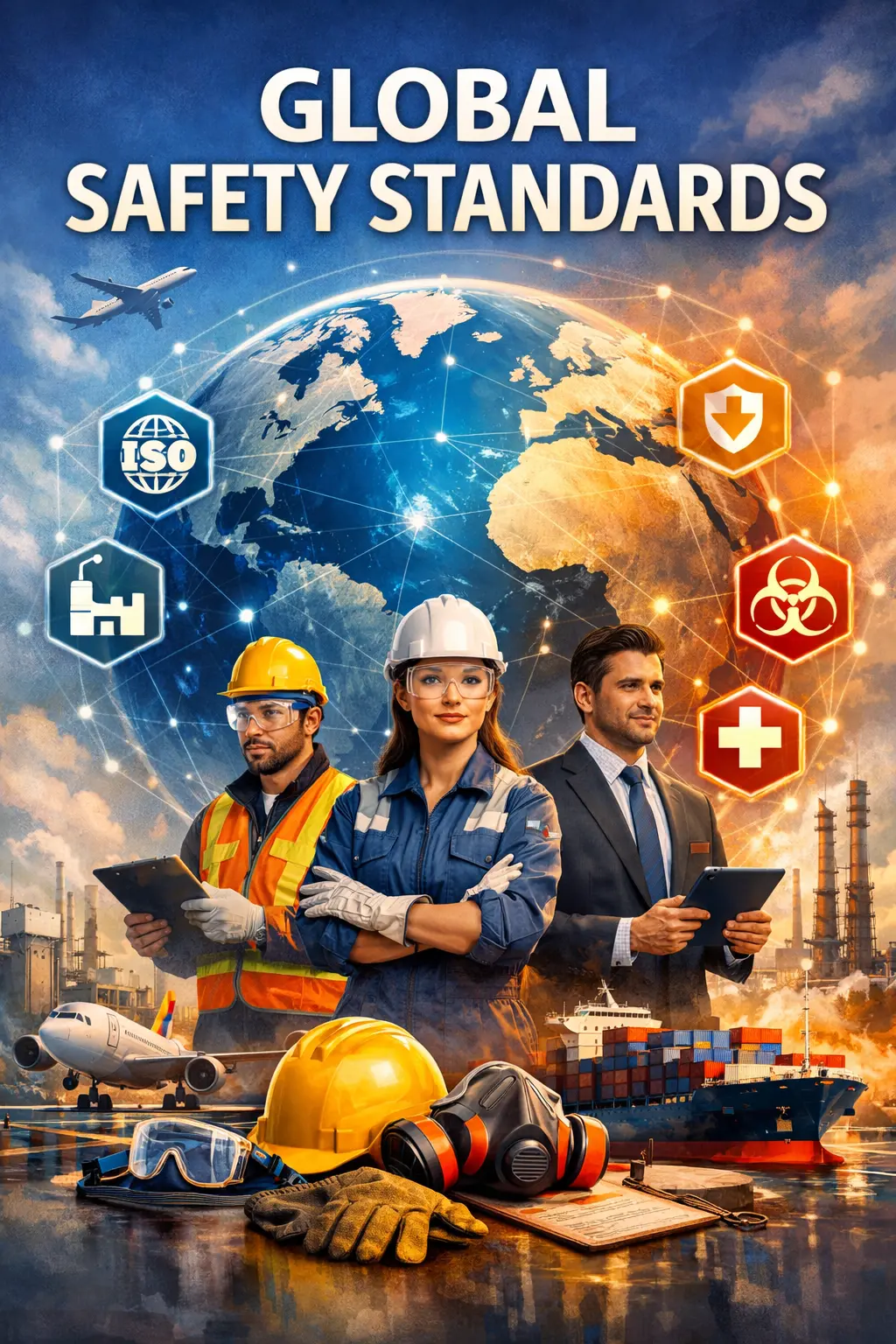
This guide focuses on that gap. It explains how global lifting standards work in practice and how they influence safety on site.
Lifting operations involve heavy loads and high forces. The margin for error is extremely small. When something fails, it fails quickly and without warning.
Safety standards exist to create consistency across the entire process. They ensure that equipment is designed, tested, and used within predictable limits.
They also create a shared language between manufacturers, engineers, procurement teams, and operators. Without standards, coordination between these groups would be unreliable and risky.
Even with standards in place, safety still depends on how well they are understood and applied in the field.
Before looking at global standards, there are three key concepts that must be clear. These are the foundation of every lifting decision.
WLL is the maximum load that equipment can safely handle under normal working conditions.
This is the number displayed on the equipment. It is the limit you must follow during operation.
It is not flexible and should never be exceeded.
MBL is the load at which the equipment fails during testing.
This value is always higher than the WLL, but it is not meant to be used in real operations.
Using MBL as a reference for lifting capacity removes the safety margin completely.
The safety factor is the ratio between MBL and WLL.
For example, a safety factor of 5 to 1 means the equipment can withstand five times its working load limit before failure during testing.
Different standards require different safety factors, which directly affects how equipment performs under stress.
WLL is the safe working limit.
MBL is the failure point.
The safety factor is the margin between them.
If you exceed WLL, you are no longer operating safely.
Lifting standards vary by region and industry. They are not interchangeable and should not be treated as such.
ASME B30 is widely used in the United States. It covers different categories of lifting equipment such as slings, hooks, and rigging hardware.
Although it is not always legally mandatory, it is heavily referenced by OSHA. This makes it a practical requirement in most industrial operations.
EN standards apply across the European Union.
Examples include EN 1492 for slings and EN 818 for chains.
Products that meet these standards carry CE marking, which is essential for market access within Europe.
ISO standards provide a global reference point.
They are commonly used in projects that involve multiple countries.
In many cases, ISO acts as a baseline while local standards add additional requirements.
LOLER is a legal regulation, not just a guideline.
It requires proper equipment selection, regular inspections, documented records, and structured lift planning.
Failure to comply can lead to legal consequences.
It is a mistake to assume that all lifting standards are similar.
There are important differences in safety factors, marking requirements, inspection intervals, and legal enforcement.
For example, some European standards require higher safety factors compared to typical US standards.
These differences affect equipment selection, compliance strategy, and overall safety margins.
Different equipment types are governed by different standards.
Understanding which standard applies to each type is essential for safe procurement and usage.
Even when equipment meets all standards, failures still occur.
These are the most common causes.
Using MBL as a working reference removes the safety margin.
When the lifting angle changes, the load distribution changes as well.
This can significantly increase the tension on each sling leg.
Heat, chemicals, and UV exposure can weaken lifting equipment over time.
This damage is not always visible.
Incorrect setup, poor communication, and skipped inspections remain the leading causes of incidents.
Most failures are not caused by defective equipment.
They are caused by incorrect calculations, ignored angles, lack of inspection, and human error.
Compliance does not end after purchasing equipment.
Proper inspection routines are required.
Documentation must be complete and traceable.
In many industries, missing documentation is treated as a serious compliance issue.
Technology is improving how lifting operations are monitored and managed.
These developments reduce reliance on manual judgment and improve consistency.
Selecting a supplier is not just about price.
You should evaluate:
A reliable supplier supports your compliance, not just your procurement.
WLL is the only safe operating limit.
MBL is not a usable capacity.
Standards differ across regions and must be applied correctly.
Human error is the most common cause of failure.
Documentation is critical for compliance and safety.
PT. Sebatek Prima Tunggal | Lifting Equipment & Rigging Solutions
Supplying industrial lifting and rigging equipment tested to international standards – with the documentation to back it up.
© sebatek.id | “HMPE Sling Technology Guide” | Indonesia Polyester Manufacture