WhatsApp
+62818-0847-5888
Work Hours
Monday to Friday: 9AM - 5PM
WhatsApp
+62818-0847-5888
Work Hours
Monday to Friday: 9AM - 5PM

 Byadmin
Synthetic slings are widely used across industries such as construction, offshore oil and gas, manufacturing, and renewable energy due to their flexibility, lightweight design, and ability to protect load surfaces.
However, selecting the right sling is not just about capacity. Material behavior, environmental exposure, and compliance with standards such as ASME B30.9 and OSHA 1910.184 directly affect safety and performance.
This guide explains the industrial applications of synthetic slings from a technical and risk-based perspective, including how to choose the right material, evaluate load conditions, and avoid common failure scenarios.
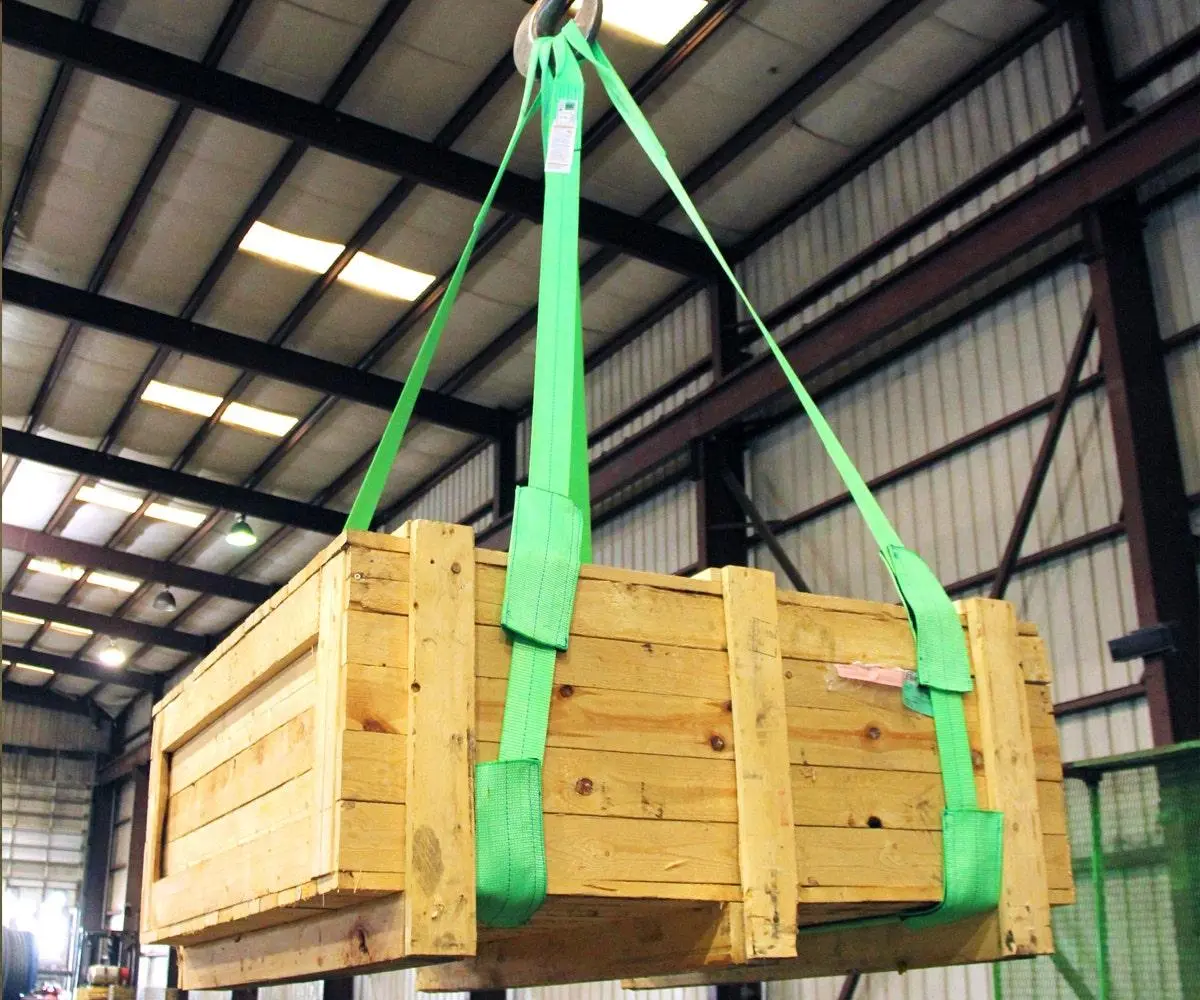
Synthetic slings are lifting devices made from high-strength synthetic fibers such as nylon, polyester, or HMPE. They are used in industrial lifting applications to safely handle loads while minimizing surface damage and reducing overall rigging weight.
Nylon slings are known for their elasticity, typically stretching 8 to 10 percent under load. This makes them suitable for applications involving dynamic or shock loading.
However, nylon performs poorly in acidic environments. Exposure to acids can degrade internal fibers without visible damage. Nylon also absorbs moisture, which reduces its effective working load capacity when wet.
Polyester slings stretch less, around 3 percent, making them more suitable for precision lifts that require better control.
They offer better resistance to most chemicals and maintain their strength in wet conditions. This makes polyester a preferred option in outdoor, marine, and industrial environments with chemical exposure.
HMPE slings, commonly known under brands like Dyneema, offer extremely high strength with less than 1 percent elongation. They are widely used in offshore and heavy lifting operations where weight reduction is critical.
However, HMPE has limitations. It is sensitive to high temperatures and can experience creep under sustained loads. It is not ideal for long-duration static lifting or high-heat environments.
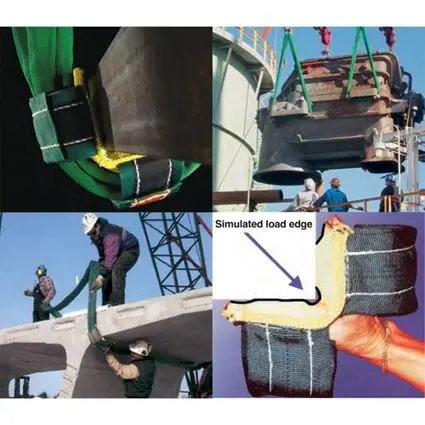
Synthetic slings are commonly used in precast concrete lifting because they distribute load evenly and reduce the risk of edge damage. Round slings in basket or choker configurations are typical.
The main risk is abrasion from rough concrete surfaces. Proper edge protection and regular inspection are essential.
In manufacturing, synthetic slings are used to move sensitive equipment such as CNC machines and turbines. Their soft contact surface prevents scratches and damage.
Polyester slings are preferred for stability and control during lifting.
Offshore environments require slings that can handle chemical exposure, moisture, and heavy loads.
Polyester and HMPE slings are commonly used. HMPE is especially valuable where weight reduction improves crane efficiency.
Traceability and certification are critical in offshore operations, including load testing and inspection records.
Port operations involve repetitive lifting in harsh conditions. Polyester slings are widely used because they maintain strength when wet and are easier to handle compared to wire rope.
Frequent inspection is required due to high usage cycles.
Wind energy applications involve lifting large turbine components such as blades, nacelles, and tower sections.
Polyester round slings are typically used due to their stability and resistance to environmental exposure. HMPE slings are used where weight and space constraints are critical.
Blade handling requires careful positioning to avoid structural damage, often using wide-body slings or custom lifting systems.
Synthetic slings in warehouses are used for handling varied loads such as pallets and bundled goods.
Nylon slings are commonly used due to their flexibility. However, operators must be aware of chemical exposure from cleaning agents.
In power plants, synthetic slings are used for lifting transformers and heavy equipment in confined spaces.
Temperature is a key factor. Nylon and polyester can handle moderate heat, while HMPE should be avoided in high-temperature environments.
Working Load Limit is the maximum load a sling can safely handle under normal conditions. It is based on a safety factor defined by standards such as ASME B30.9.
As sling angles decrease, tension increases significantly. Incorrect angles can overload the sling even when the load appears within capacity.
The bending ratio between sling and load affects strength. Smaller bend radii reduce capacity and increase stress.
In choker configurations, the sling experiences internal pressure at the choke point, reducing effective capacity.
Different materials react differently to chemicals. Nylon is sensitive to acids, while polyester performs better in chemical environments.
According to ASME B30.9 standards, synthetic slings must be properly labeled with capacity, material type, and identification for traceability.
OSHA 1910.184 requires that slings be inspected before each use and removed from service if any damage is found.
EN 1492-1 defines similar requirements for synthetic slings used in Europe, although rating systems may differ.
Synthetic slings are preferred when:
They are not suitable when:
Wire rope and chain remain better choices in high-heat and high-abrasion environments.
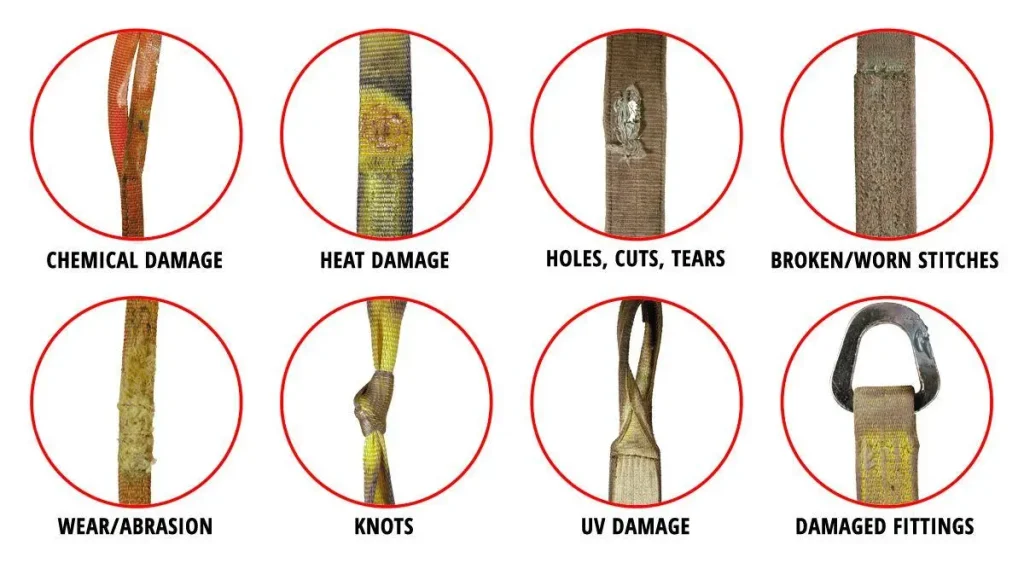
According to OSHA 1910.184, synthetic slings must be inspected before each use.
Any sling showing damage must be removed from service immediately.
Choosing the right sling depends on:
They should not be used in high-temperature environments, sharp edge contact without protection, or prolonged static loads.
HMPE slings are often preferred due to their strength and lightweight properties, but environmental conditions must be considered.
They must be inspected before each use and periodically by a qualified person according to OSHA requirements.
The industrial applications of synthetic slings cover a wide range of industries, each with specific technical requirements and risks.
Material selection is a critical decision that must consider environmental conditions, load characteristics, and compliance standards.
Following ASME and OSHA guidelines is not optional. It is the baseline for safe and reliable lifting operations.
A well-informed selection and inspection process reduces risk, improves efficiency, and ensures long-term operational safety.
Supplying industrial lifting and rigging equipment tested to international standards – with the documentation to back it up.
© sebatek.id | “Industrial Applications of Synthetic Slings” | Indonesia Polyester Manufacture