WhatsApp
+62818-0847-5888
Work Hours
Monday to Friday: 9AM - 5PM
WhatsApp
+62818-0847-5888
Work Hours
Monday to Friday: 9AM - 5PM


If you have spent any time managing lifts on a construction site, you know that a failed sling is not just an equipment problem. It is a potential fatality. Webbing slings are everywhere in construction. They are affordable, lightweight, and…

Published by Sebatek | PT. Sebatek Prima Tunggal Industrial Lifting Equipment & Rigging Specialist Calculating webbing sling load capacity requires three core inputs: the sling’s Working Load Limit (WLL), the number of sling legs, and the sling angle relative to…

Most lifting incidents do not happen because someone ignored the rules. They happen because someone followed a rule they did not fully understand. The webbing sling safety factor is one of the most referenced numbers in rigging, and also one…

Choosing between polyester and nylon is a technical decision based on physics and environmental chemistry. Picking the wrong one doesn’t just shorten the sling’s life; it changes how the load behaves mid-air. 1. Technical Performance Snapshot Feature Polyester (PES) Nylon…

(7:1 Safety Factor, Color Code & Inspection Guide) Safety Factor, Color Code & Compliance Guide for Engineers, Safety Officers, and Procurement Teams EN 1492-1 is a European standard that defines the safety, design, testing, and labeling requirements for flat webbing…

Every year, rigging failures cause serious injuries and fatalities on job sites around the world. Most of them are preventable. A lot of incidents trace back to one simple decision made before the lift even started: picking the wrong sling…
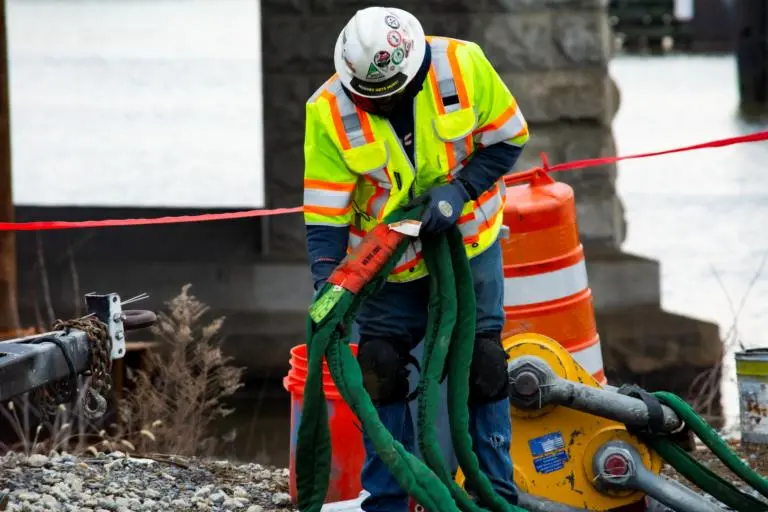
Every rigging failure has a paper trail. Somewhere in that trail, a procurement decision was made based on price, availability, or a vendor’s marketing copy rather than verified technical compliance. The result: equipment downtime, OSHA citations, civil liability, and in…

Synthetic slings are widely used across industries such as construction, offshore oil and gas, manufacturing, and renewable energy due to their flexibility, lightweight design, and ability to protect load surfaces. However, selecting the right sling is not just about capacity.…

Most Lifting Failures Are Not Equipment Failures A dropped load is rarely caused by weak equipment. In most cases, the failure starts with a wrong calculation. A sling that looks strong enough can still fail if the actual tension exceeds…

Sling inspection is the process of examining lifting slings to detect damage, wear, or defects that could reduce their load capacity. According to OSHA 1910.184 and ASME B30.9, inspections must be performed before use, regularly during operation, and periodically based…

Every year, lifting accidents still happen across construction sites, offshore platforms, and industrial environments. What makes it worse, many of these incidents are not caused by equipment failure. They happen because the standards behind the equipment are not fully understood…

A comprehensive technical reference for rigging engineers, offshore lifting supervisors, procurement managers, and heavy industry contractors working with high-performance synthetic lifting slings. Technical Definition: HMPE Sling An HMPE sling is a high-performance synthetic lifting sling manufactured from ultra-high molecular weight…